
Key Takeaways
This article provides an overview of stomas, both end and loop types, and outlines the characteristics of a healthy stoma, such as being moist, beefy red, round, budded, and strategically located. It emphasizes the importance of stoma assessment due to the absence of sensory nerve endings, which prevents patients from feeling pain, highlighting the need for thorough clinical evaluations to detect potential issues early.
There are two main types of stomas, and they both have certain “ideal” characteristics in common. Do you know what they are?
You say potato, I say potahto. You say ostomy, I say … stoma. Huh? Those of us in wound care know that it’s not uncommon to hear the terms ostomy and stoma used interchangeably, even though they have different meanings.
What is a stoma?
Let’s start with the basics:
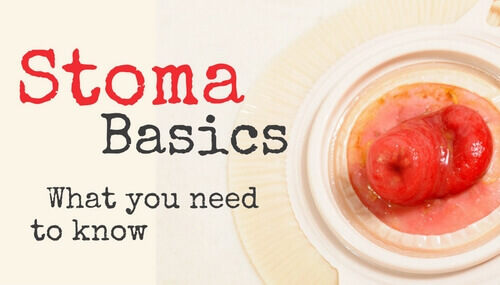
- The stoma is the mouth-like, visible part of an ostomy.
- A fecal or urinary stoma is composed of a mucous membrane or the lining of the intestine that’s exposed to the surface.
- Following ostomy surgery, effluent (output)—such as fecal matter, urine, or mucous—will pass through the stoma’s opening, called the lumen.
- The patient will not have voluntary control of the effluent expelled by the stoma.
Types of stomas
There are two major categories of stomas: the end and the loop.
End stoma
An end stoma is created when the surgeon brings one end of the GI tract through the abdominal wall and then folds it over. The surgeon then removes the other end or sews it shut.
In some cases, the surgeon will create end stomas from both ends of the GI tract, called a double-barrel stoma. In this case, you’ll see two distinct stomas: the proximal stoma discharges stool, and the distal stoma discharges mucous. Sometimes, an expanse of skin separates the two stomas, and sometimes, they will share the same opening. This construction is most common for infants or very small children.
Loop stoma
To create this type of colostomy, the surgeon lifts a loop of the transverse colon through the abdomen. The colon is given a small split on the side facing out, and a rod is placed underneath for support. The rod may be removed after a few days when support is no longer needed. The proximal opening of the stoma drains stool from the intestine, while the distal opening of the stoma drains mucus. Loop stomas are usually created for temporary ostomies.

Characteristics of an ideal healthy stoma
Each stoma is unique, just as each patient’s physiology is unique. Different surgical techniques will result in stomas of different appearance. At the same time, the “ideal” stoma has some identifiable characteristics:
Moist
The inner surface of the stoma continually produces mucus to cleanse the stoma. Mucus production is a normal function of the intestines that serves as natural lubrication for food passing through the body. The mucus gives the healthy stoma a wet appearance.
Beefy red
Blood flow is essential to the health of the stoma. Normal stoma tissue is highly vascular and will appear deep pink to red. Pale pink is also normal in a urinary stoma. Stoma tissue may even bleed slightly when rubbed or irritated, which is normal. When a stoma turns pale or dark, it means there’s a problem with the blood supply, so be sure to investigate.
Round
A round stoma is easiest to measure with circular rulers. It also works best with pre-cut skin barriers (the part of the ostomy appliance that affixes to the skin and attaches to the pouch). An oval or irregularly shaped stoma may require cut-to-fit skin barriers.
The shape is affected by the type of ostomy and the individual’s body composition. The shape can also vary with the wave-like muscular contractions of the intestines and the peristaltic movement.
Budded/protruding
When a stoma has a rosebud shape (rather than flat or retracted), it protrudes into the pouching system. This allows the effluent to fall out into the pouch away from the body. The ideal protrusion is 2 to 3 cm, with a lumen in the center.
Strategically located
To easily accommodate the skin barrier, it’s ideal to have 2-3 inches of flat skin around the stoma. Avoid beltlines, bony prominences, skin folds, suture lines, or the umbilicus (belly button). Also, the patient will have more success managing a stoma located in an area that they can see and reach.
Stoma assessment
The stoma itself has no sensory nerve endings, which means there is no sensation for the patient. In other words, the patient may not feel pain or discomfort if the stoma becomes lacerated or injured. Therefore, your thorough clinical assessment of the stoma and the surrounding skin is essential to catching problems early.
Elevate your expertise with WCEI's Ostomy Management course!
Learn More
What do you think?