If you work in wound care, chances are you’ve cared for someone using a “wound vac”. Beyond the visible equipment, though, what’s really happening at the wound site — and in which situations is this therapy most appropriate?
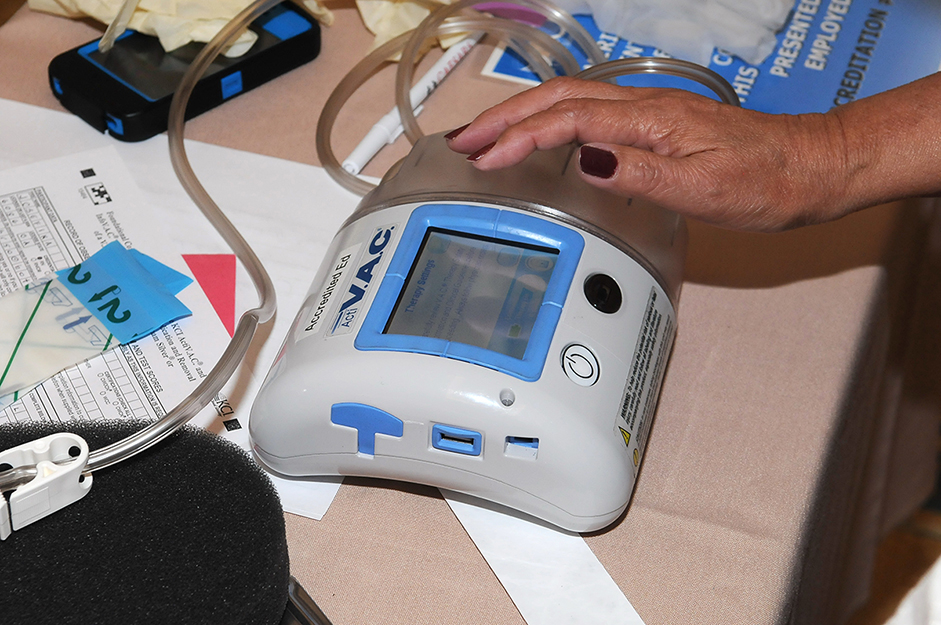
Wound vac, commonly known as negative pressure wound therapy (NPWT), is a dressing system that uses gentle suction to help a wound heal. The setup is simple: a foam or gauze dressing goes into or over the wound, a clear film seals the dressing tightly against the skin, and a tube runs from the dressing to a small pump and drainage canister. When the pump is turned on, it creates negative pressure — or “vacuum” — over the wound site.
Because many NPWT pumps are portable and lightweight, patients often carry them around (or can even go home with them) instead of being tethered to a large machine.
What does a wound vac do?
Using negative pressure over a wound helps in a few important ways:
- Removes excess fluid and reduces swelling. The vacuum draws out exudate, inflammatory fluid, and potentially contaminated fluid from the wound. That reduces edema, lowers pressure around tissues, and helps create a cleaner wound bed.
- Brings wound edges closer together. The suction gently pulls the edges of the wound inward, which can accelerate closure and reduce the overall wound size.
- Encourages healthy tissue growth. The environment created by NPWT — moist but controlled, with good fluid drainage — helps support granulation tissue formation, angiogenesis (new blood vessel growth), and improved perfusion. In other words, it helps the body heal the wound more efficiently.
- Reduces dressing changes and helps maintain a stable wound environment. Because the system seals the wound and manages drainage, dressing changes are needed less frequently (often every 2–3 days rather than daily), and the wound is better protected from disruption, contamination, or friction.
When you’d typically choose a wound vac
NPWT isn’t for every wound — but it shines when you’re dealing with complex, stubborn, or high-risk wounds. Some of the common indications:
- Chronic wounds (e.g., diabetic ulcers, pressure injuries) that have stalled or aren’t responding to simpler dressings.
- Large or deep wounds, traumatic injuries, or surgical wounds that can’t be closed primarily (or reopened/dehisced wounds).
- Wounds with high exudate — where fluid build-up, drainage, or edema pose a barrier to healing.
- Skin grafts or flaps, where maintaining a stable environment and good tissue contact is especially important.
Because NPWT often helps wounds heal more quickly and reduces the need for frequent dressing changes, it can also improve patient comfort and make home-based wound care more manageable.

What to watch out for
As with any therapy, NPWT comes with trade-offs and risks — it’s not a magic bullet. Some concerns:
- Not all wounds are appropriate. You want a well-prepared wound bed — no large amounts of necrotic tissue, no untreated infection, and no exposed vital structures (like arteries, organs, nerves). Other contraindications are: malignancy in the wound, active bleeding from the wound, and the presence of fistulas.
- Possible complications. Bleeding, pain, infection, or skin irritation can occur. Also, if the seal breaks or the tubing gets clogged, the therapy may fail, which is especially risky at home without close monitoring.
- It’s an adjunct — not a replacement. NPWT supports healing; it doesn’t substitute for good debridement, infection control, off-loading, or other fundamental wound-care practices.
Because of these issues, clinicians need to evaluate each wound individually and ensure best practices in application, monitoring, and dressing changes (usually every 48–72 hours, unless otherwise indicated).
Why wound-care professionals value NPWT
Instead of fighting gravity, fluid build-up, and tissue stress, NPWT helps manage those challenges by:
- gently pulling the wound together
- removing excess fluid that slows healing
- boosting blood flow and tissue regrowth
- reducing the need for frequent dressing changes
For many patients — especially those with complicated or chronic wounds — that support can make the difference between slow, stalled healing and a real path toward closure.
That’s why, in modern wound care, NPWT is considered a go-to tool when used judiciously and combined with comprehensive wound-management protocols. NPWT turns open, messy, slow-healing wounds into a more controlled, dynamic environment — one where the mechanics of suction, drainage, and tissue stimulation work together to speed up healing.
Elevate your expertise in Skin+ Wound Management.
Explore courses

What do you think?